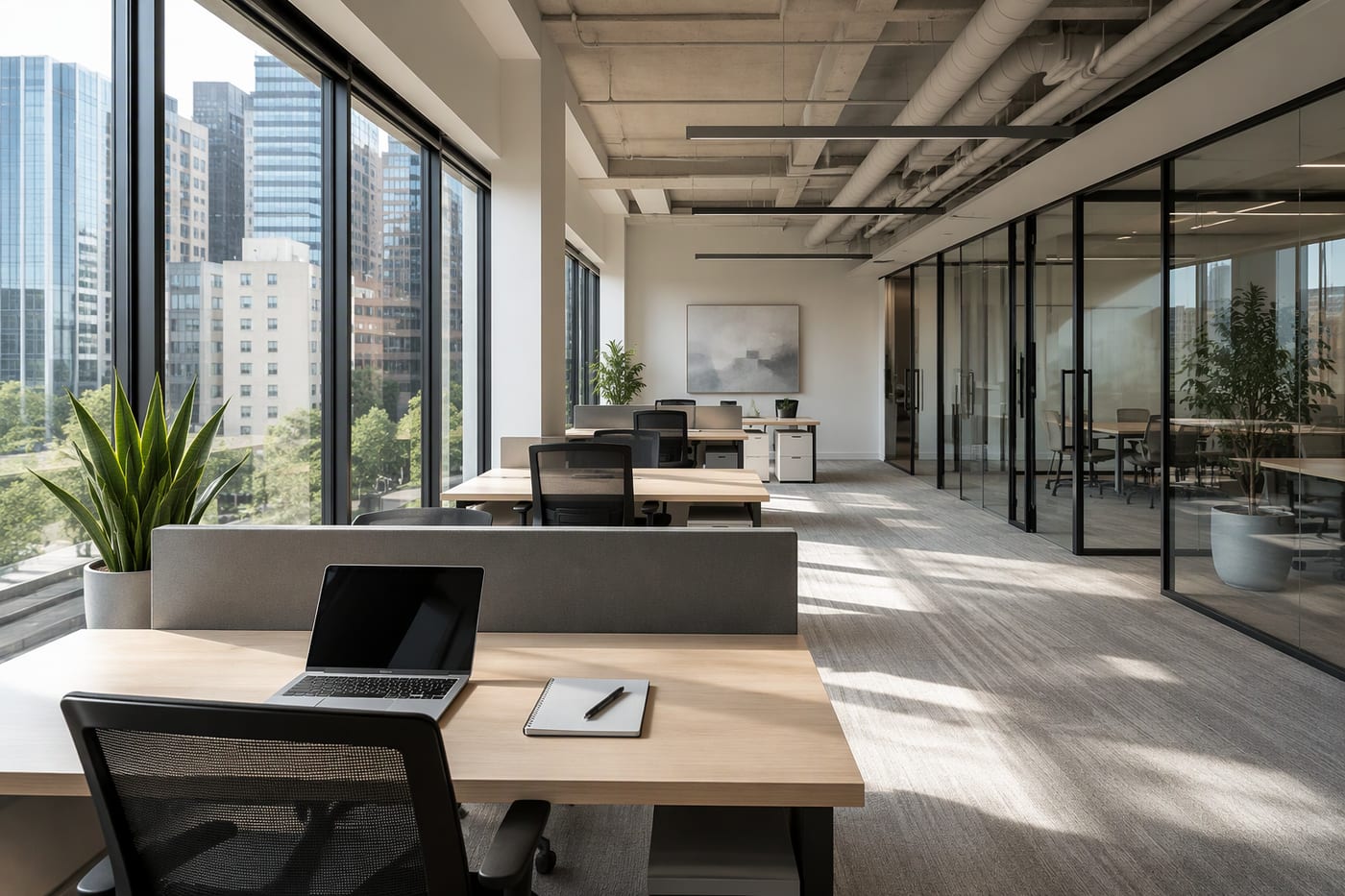
Heat · Glare · Fade
Solar control film
Spectrally selective and ceramic films that reject a large share of total solar energy while keeping daylight and the view. Matched to each elevation, because west glass is not north glass.
Architectural film · Commercial & residential
We install solar control and safety film on the glass you already have — cutting heat, glare and UV without replacing a single pane. Surveyed, specified and fitted by our own certified crews.
The retrofit case
Most buildings gain and lose more heat through glazing than through any other surface. The reflex answer is new insulated units — capital-heavy, disruptive, and weeks of interior works or scaffolding.
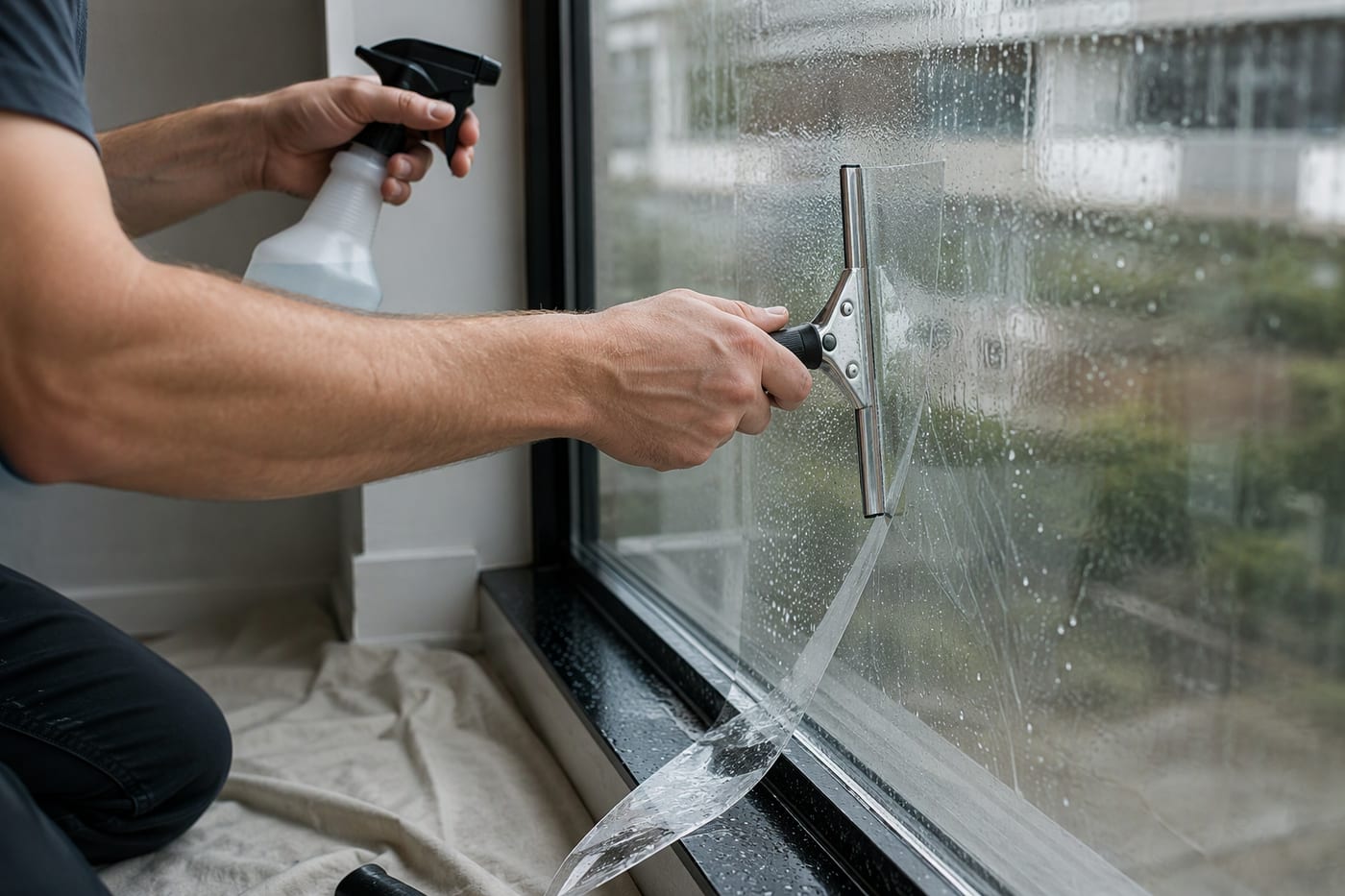
Film changes how the existing glass performs. It rejects solar energy before it becomes cooling load, takes glare off screens, blocks almost all UV fade, and holds broken glass together after impact. Installation is measured in hours per elevation, not weeks.
Film systems
We specify from measured glass data and sun exposure — not from a colour card. Every quote states the film grade, its published performance figures and the glass it is going on.
Heat · Glare · Fade
Spectrally selective and ceramic films that reject a large share of total solar energy while keeping daylight and the view. Matched to each elevation, because west glass is not north glass.

Impact · Breakage · Blast
Heavy-gauge film that keeps fragments bonded to the pane, so a broken window becomes a barrier instead of a shower of shards — with optional perimeter anchoring for forced-entry resistance.
Where we work
A call-centre floor, a bakery counter and a nursery all need different film — different glare limits, different safety ratings, different cleaning regimes.
Glare off screens, heat off the perimeter zone, views intact.
Protect stock from UV fade and keep shopfronts comfortable.
West-facing rooms that stay usable in the afternoon.
Glare control and shatter retention on large glazed areas.
Privacy film, glare control and safer glass in patient areas.
Heat rejection on high-glare facades and skylight film.
Performance
Visible light transmission (VLT) is how much daylight comes through. Total solar energy rejected (TSER) is the share of the sun’s energy the film keeps out. Higher VLT keeps rooms brighter; higher TSER keeps them cooler.
| Film type | VLT | TSER | UV blocked | Best for |
|---|---|---|---|---|
| Neutral solar | 30–40% | 50–60% | >99% | West and south elevations where cooling dominates |
| Spectrally selective | 50–60% | 42–52% | >99% | Offices that need daylight and a clear night view |
| Ceramic clear | 65–70% | 40–48% | >99% | Retail and living spaces — near-colourless |
| Safety / security | 70–88% | 15–35% | >99% | Impact and forced-entry protection, minimal tint |
Typical published ranges for 6 mil film on 6 mm clear glass. Actual performance depends on film grade, glass build-up and existing coatings — we quote from the manufacturer’s data sheet for your specific glass, and can show measured before/after readings on site.
Process
You get the same people at the survey, the install and the handover. Nothing is subcontracted.
We record glass type, coatings, frame depth, sun path and access. Free, on site, about 45 minutes.
You see two or three grades on your own window, in your own light, before anything is ordered.
Dust-sheeted work areas, edge-sealed film, every pane checked against the light before we leave.
Curing notes, cleaning instructions and the manufacturer-backed warranty registered in your name.
Recent work
A sample of recent installs across the service area.
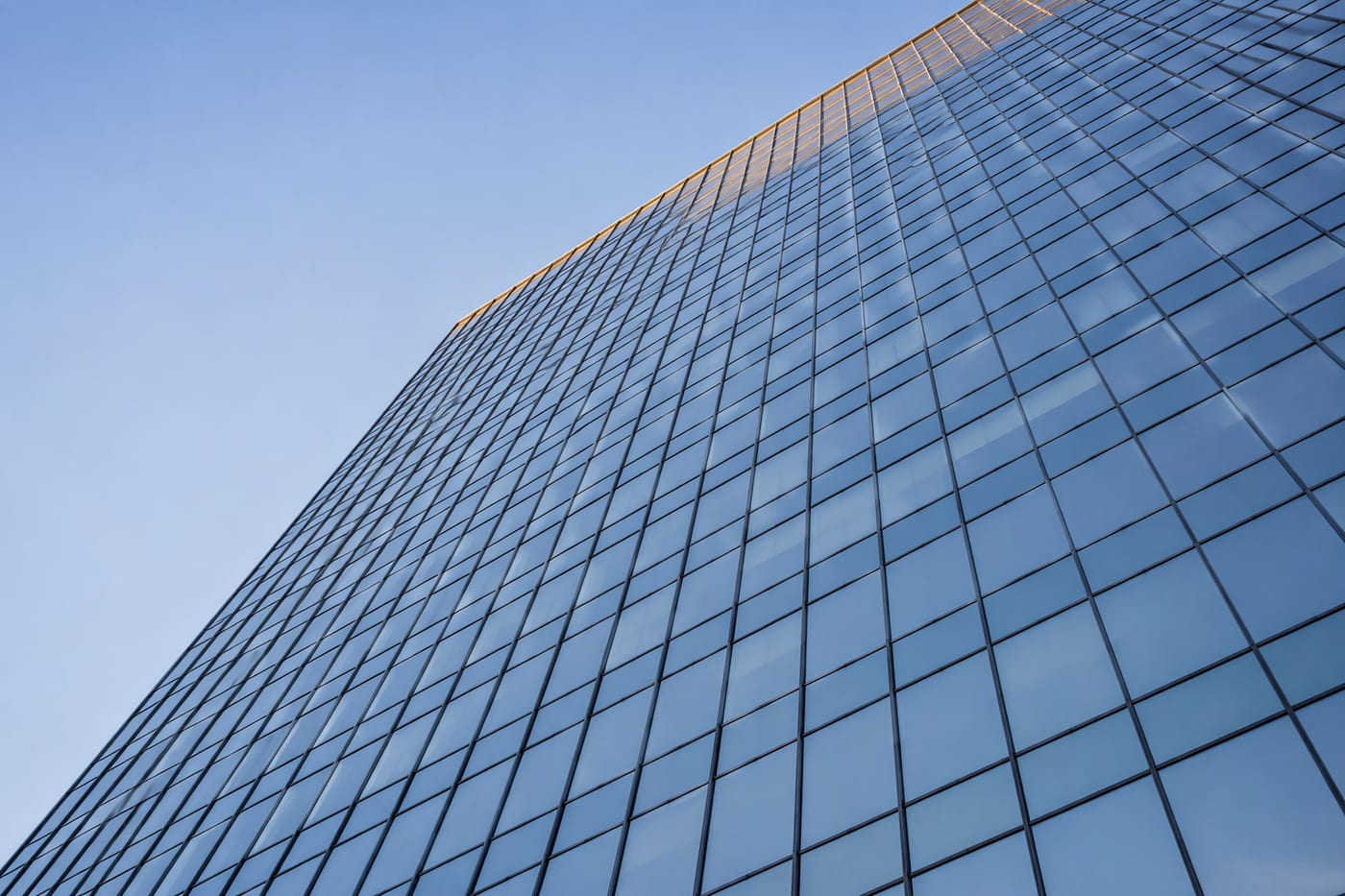
Perimeter overheating resolved without replacing glazing.
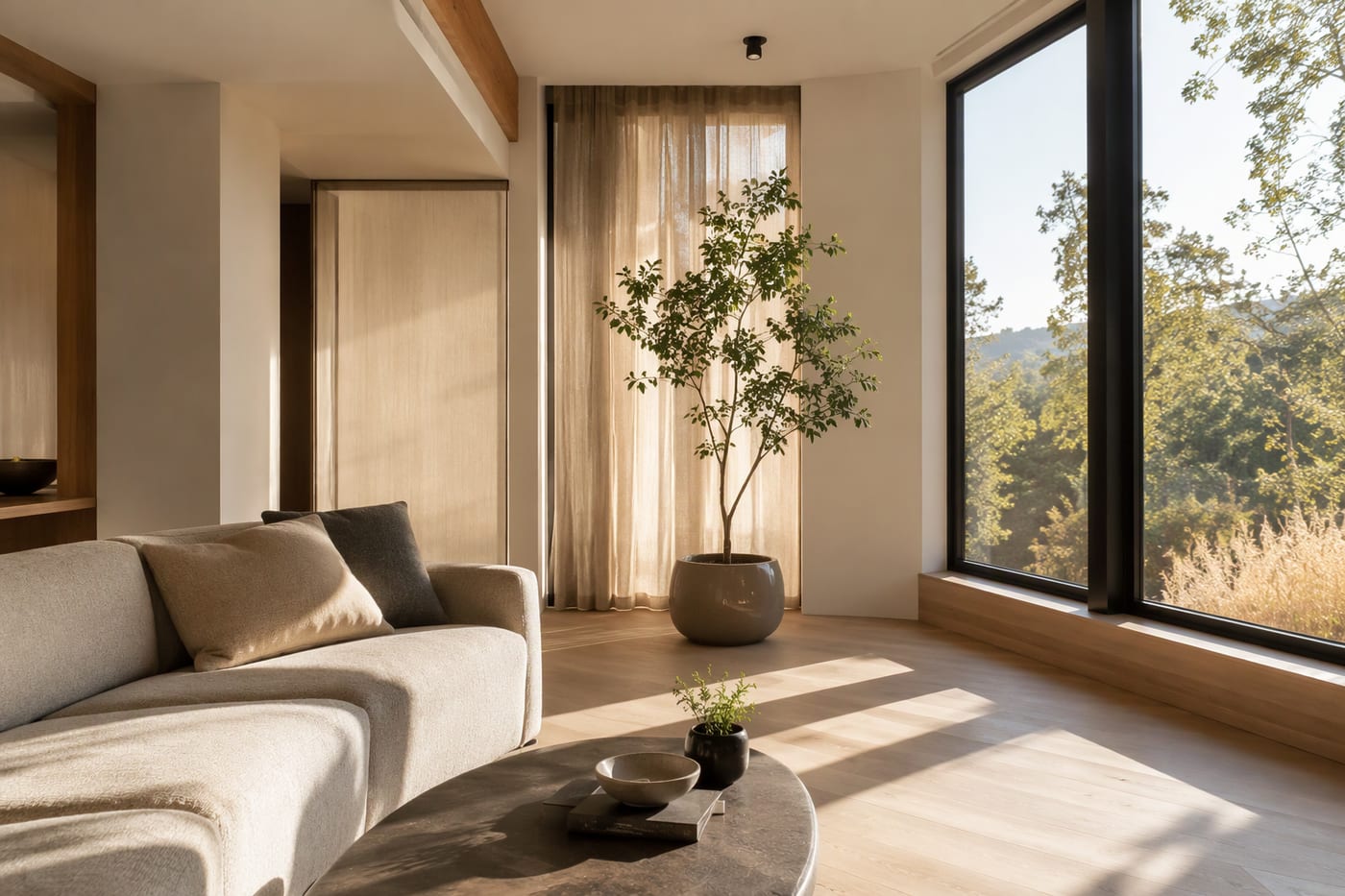
Afternoon glare and heat cut, furniture protected from UV.
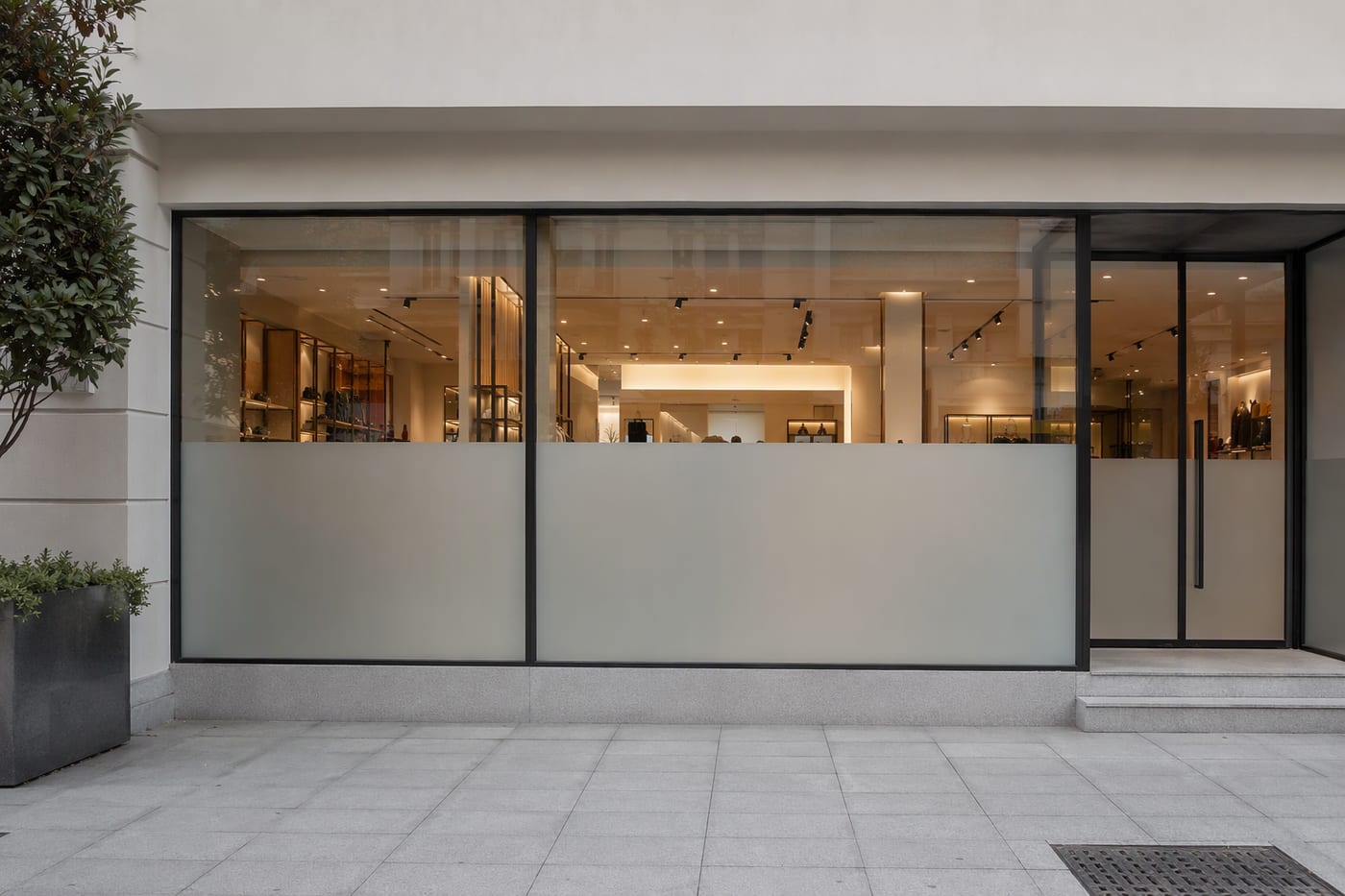
Frost bands for privacy, clear film on the display glass.
Client feedback
“The fourth floor used to be unusable after 2pm. We booked the survey on a Monday and the west elevation was filmed by Thursday.”
“They tested three films on our window before we chose. No pressure, and the price on the quote is the price we paid.”
“Clean work, dust sheets everywhere, and they worked around our opening hours. The shopfront looked untouched afterwards.”
Questions
It can, if the wrong grade is used. VLT is chosen per room: a living room may keep 60–70% of daylight, while a west-facing office that overheats may drop to 35%. We put samples on your glass so you judge the light before ordering.
A typical house is one day. A single elevation of a commercial building is usually one to two days including access setup. We give a start and finish date in the quote, not a range.
Film is applied to the interior surface and removes cleanly with professional methods. The one real risk is thermal stress on certain tinted, reflective or sealed-unit glass, which is why we check glass type at survey and exclude unsuited assemblies rather than film them.
Residential work is priced per square foot of filmed glass by grade; commercial work is quoted per elevation after survey, including access and after-hours working. You get a fixed written price before any film is ordered.
We measure the glass, photograph the elevations and leave you with two or three film options and a fixed price. No obligation, no sales visit.