Retention
Fragments stay attached to the film layer, so the pane stays in the opening and the opening stays closed.
Safety & security
Annealed glass does not break into a barrier — it breaks into shards. Heavy-gauge safety film keeps those fragments bonded to the pane, so an impact leaves a cracked shield instead of a hole.

What it does
Safety film does not make glass unbreakable. It changes what happens after the break — and that is where injuries, loss and entry actually occur.
Fragments stay attached to the film layer, so the pane stays in the opening and the opening stays closed.
Anchored systems turn a two-second smash into minutes of work — time that a deterrent, an alarm response or a locked interior door needs.
On laminated or blast-rated assemblies, film reduces the secondary glass fragments that cause most injuries in an explosion.
Grades
Film gauge is stated in mil (one thousandth of an inch). The jump from 4 mil to 8 mil is not cosmetic — it changes the failure mode of the whole assembly.
| Gauge | Typical use | Anchoring | What it buys you |
|---|---|---|---|
| 4 mil (100 micron) | Anti-spall, homes, schools, glass partitions | Not usually required | Fragments held, reduced injury from broken glass |
| 7–8 mil | Storefronts, lobbies, ground-floor glazing | Recommended | Retention under repeated impact, delays smash-and-grab |
| 14 mil | High-risk retail, data rooms, forced-entry resistance | Required — wet-glazed or mechanical | Sustained resistance to deliberate attack |
| Blast mitigation systems | Embassies, critical infrastructure, curtain wall | Engineered anchor system | Documented response to a defined blast load |
Anchoring means the film is bonded into the frame perimeter rather than stopping at the glass edge — without it, a determined impact can push the whole filmed pane out of its rebate.
Blast & forced entry
For a blast or attack-resistant requirement, the film is one component of an assembly: glass, film, edge retention, frame and anchorage are assessed together against a defined threat.
We work from the project’s performance specification, install to the manufacturer’s tested detail, and hand over the test documentation for the assembly — not just a film data sheet.
Where it is specified
Corridor glazing, entrance doors and ground-floor classrooms — anti-spall film plus anchor where doors are the weak point.
Smash-and-grab resistance on street-facing glass, with film that stays clear enough for window displays.
Full-height glass walls treated for retention, with privacy bands where the interior is overlooked.
Sliding doors and low-level glazing filmed so a break does not leave an open edge at child height.
On compliance claims. Film applied to existing glass does not, by itself, convert a pane into safety glazing. Compliance is assessed on the tested assembly — glass, film, frame and anchorage — against the applicable standard, for example ANSI Z97.1 / CPSC 16 CFR 1201 for safety glazing, or ASTM F1642 for glazing subjected to blast. We supply the manufacturer’s test evidence for the exact assembly specified so your consultant can verify it.
Questions
No. It is delay-resistant. An anchored 14 mil system makes entry through the glass slow and loud, which is usually enough to change the outcome — but it is one layer of a security plan, not a substitute for an alarm or physical barriers.
Clear safety film is close to invisible and keeps the glass transparent. Some thicknesses show a very slight texture at grazing angles; we show you a sample pane before ordering.
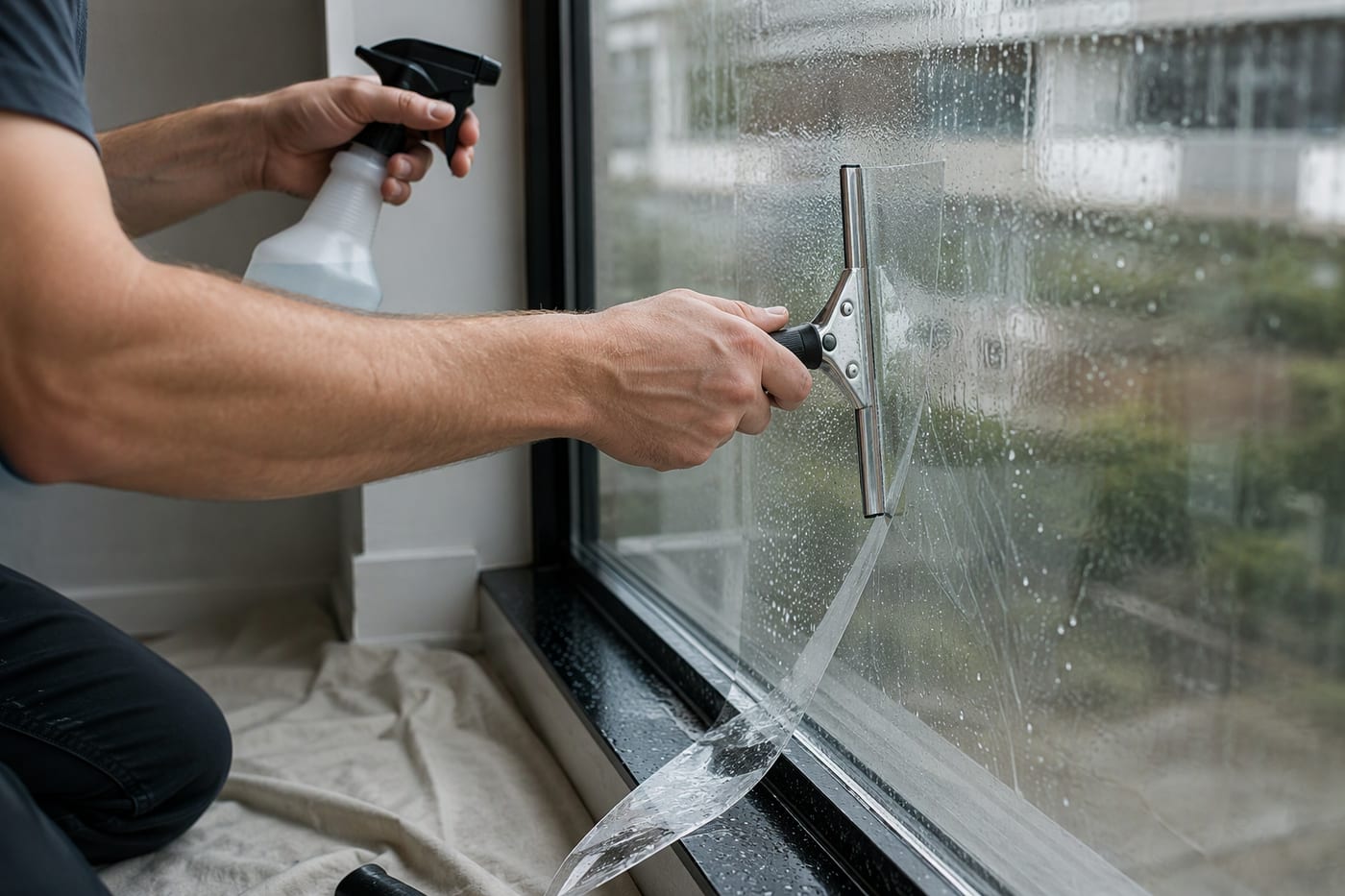
Yes — interior application on site, with the frame cleaned and the perimeter detail prepared first. Anchoring requires access to the frame rebate, which we assess at survey.
Manufacturer warranties for architectural safety film typically run 10–15 years indoors depending on grade and exposure. We register the warranty in your name and leave care instructions.
Tell us the building type and the concern — breakage, entry, blast — and we will survey the glazing and specify a film system with the documentation to match.